




Melina Arnold 1, Christian C Abnet 2, Rachel E Neale 3, Jerome Vignat 4, Edward L Giovannucci 5, Katherine A McGlynn 2, Freddie Bray 4
Affiliations Expand
PMID: 32247694 PMCID: PMC8630546 DOI: 10.1053/j.gastro.2020.02.068
Abstract
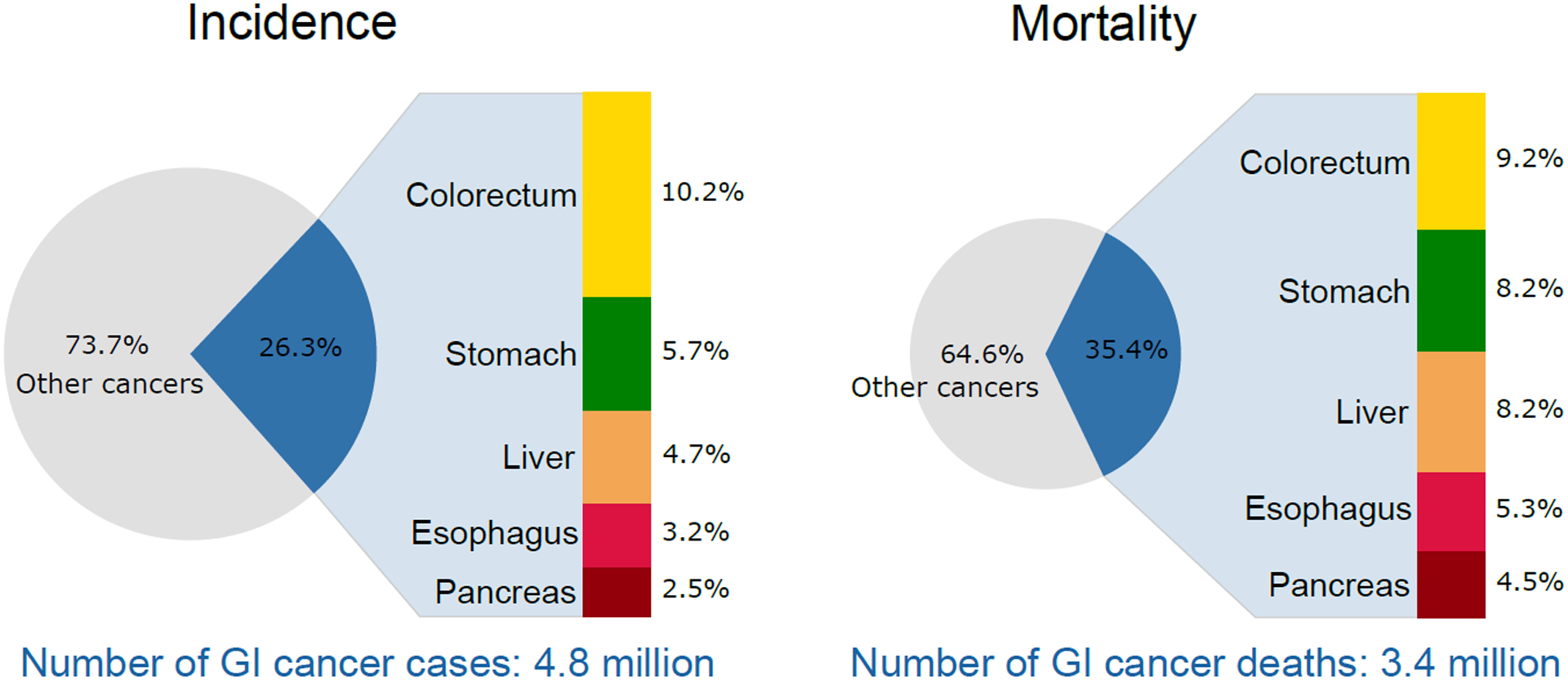
Background & aims: There were an estimated 4.8 million new cases of gastrointestinal (GI) cancers and 3.4 million related deaths, worldwide, in 2018. GI cancers account for 26% of the global cancer incidence and 35% of all cancer-related deaths. We investigated the global burden from the 5 major GI cancers, as well as geographic and temporal trends in cancer-specific incidence and mortality.
Methods: Data on primary cancers of the esophagus, stomach, colorectum, liver, and pancreas were extracted from the GLOBOCAN database for the year 2018, as well as from the Cancer Incidence in 5 Continents series, and the World Health Organization mortality database from 1960 onward. Age-standardized incidence and mortality rates were calculated by sex, country, and level of human development.
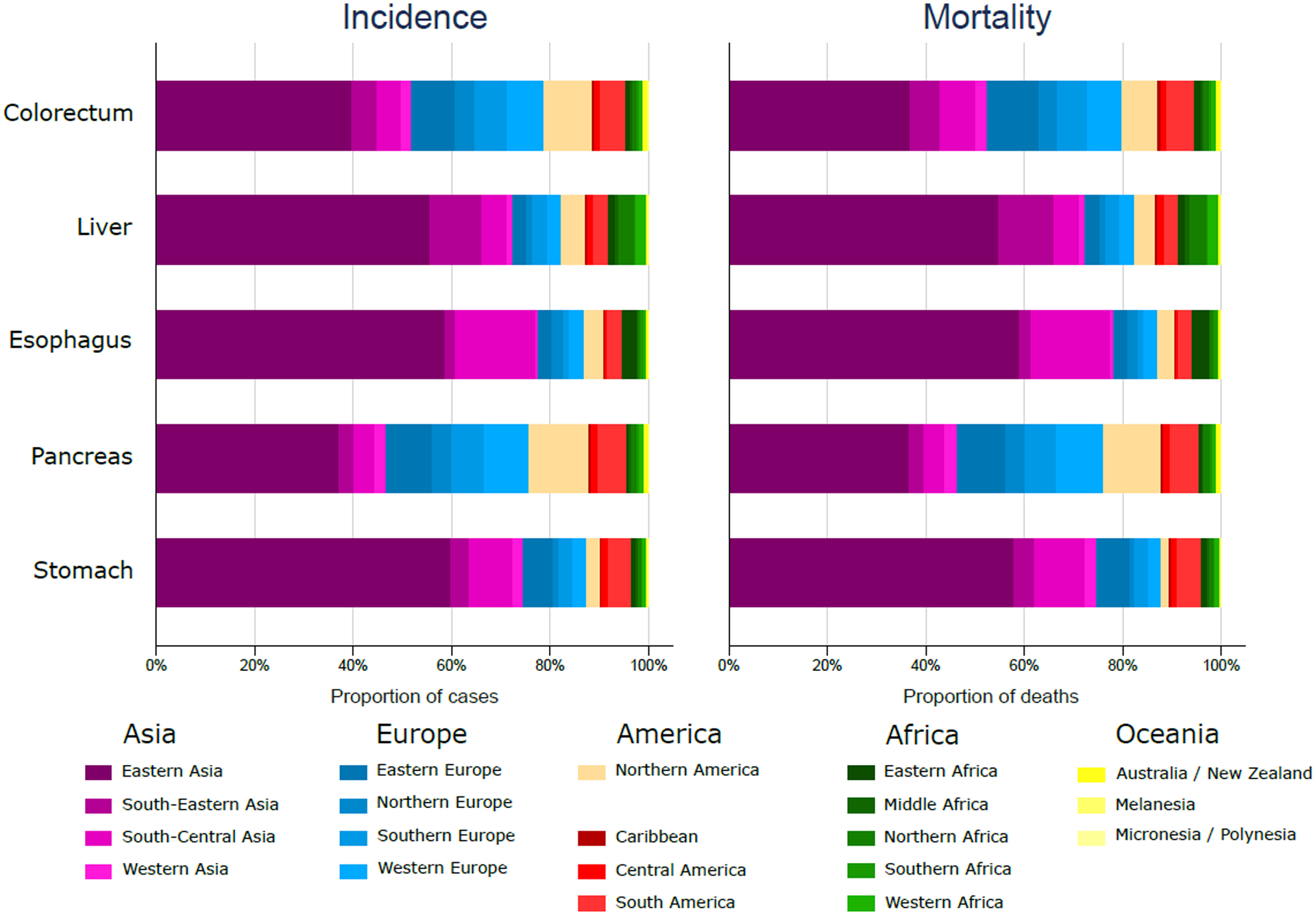
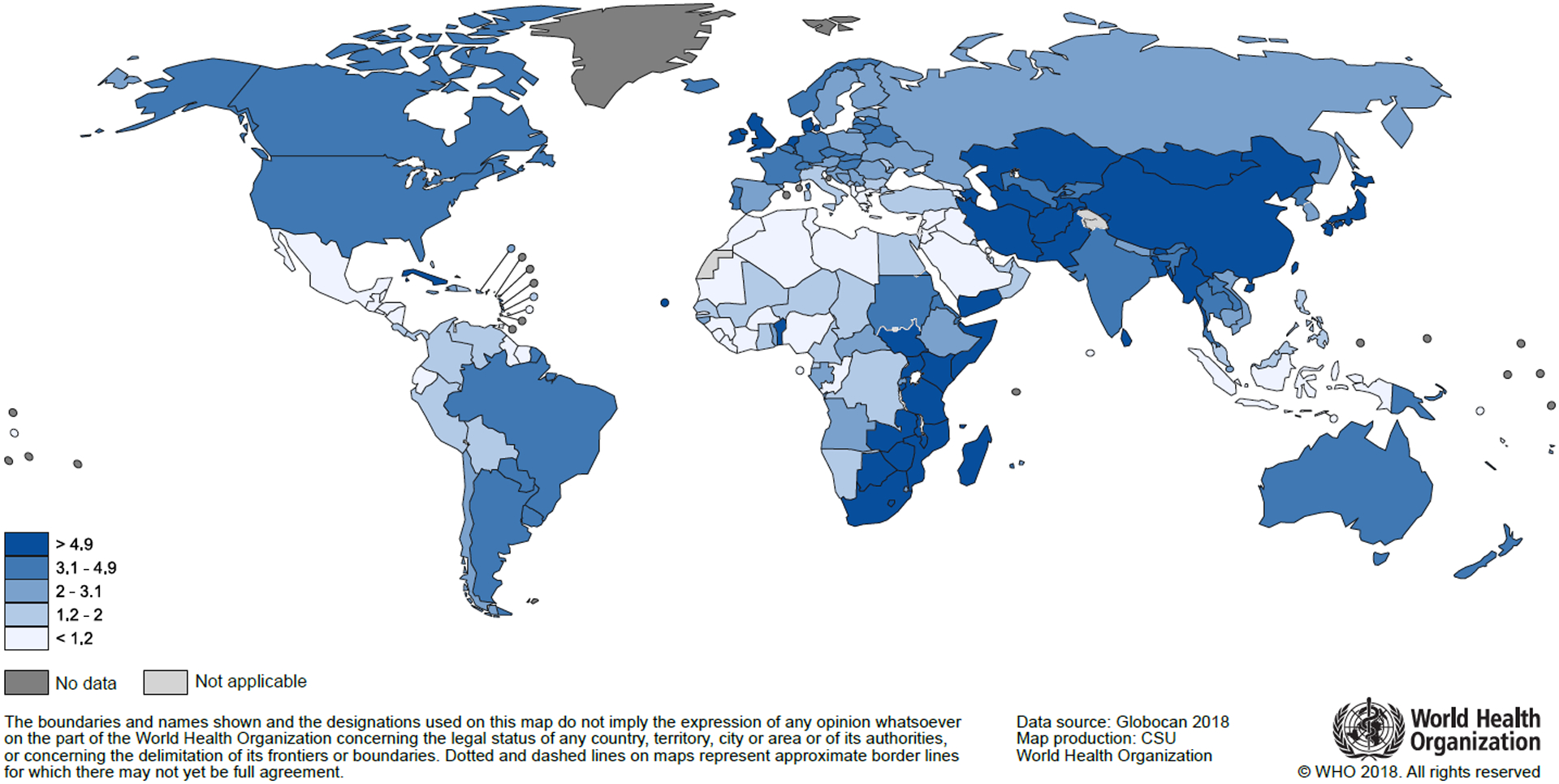
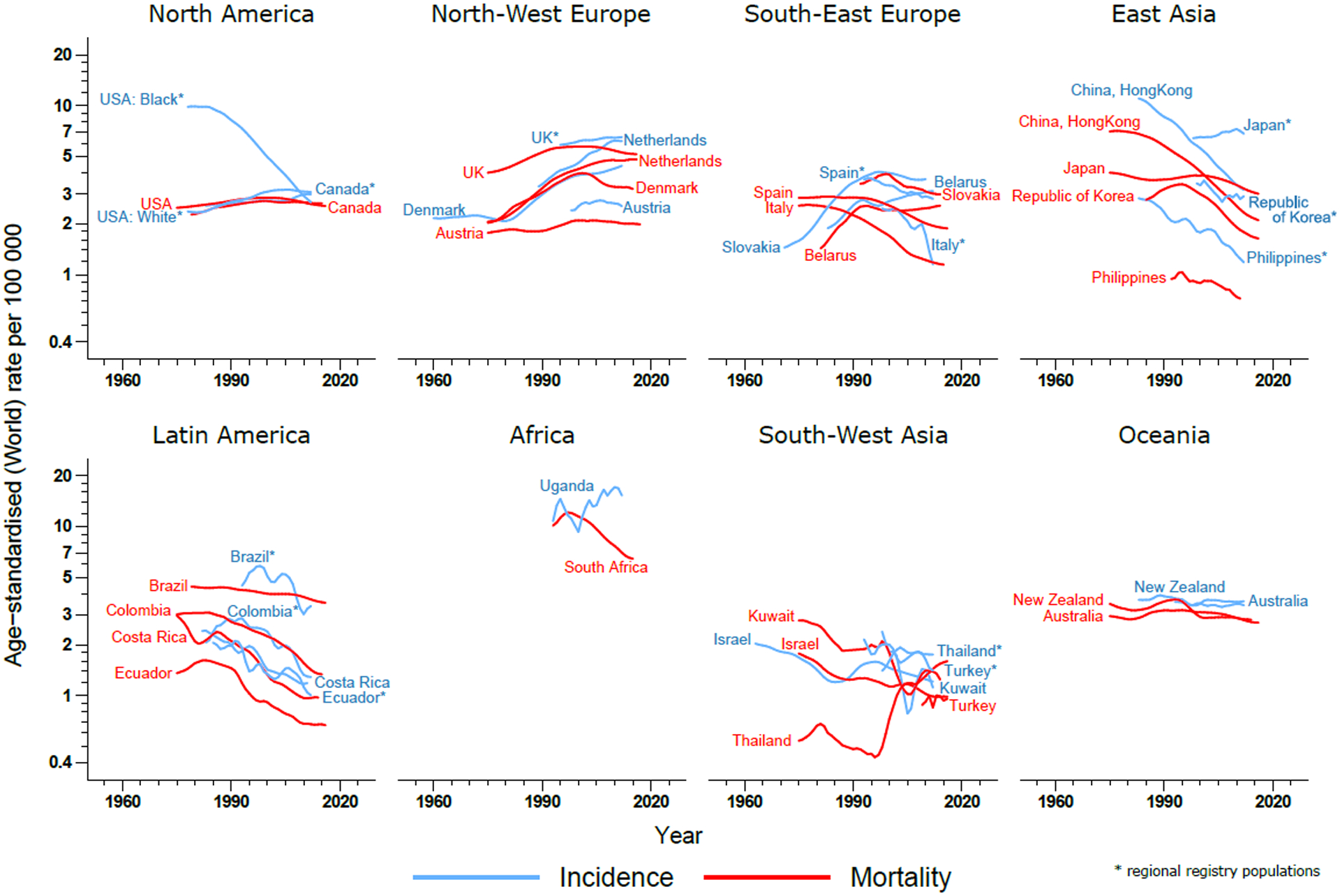
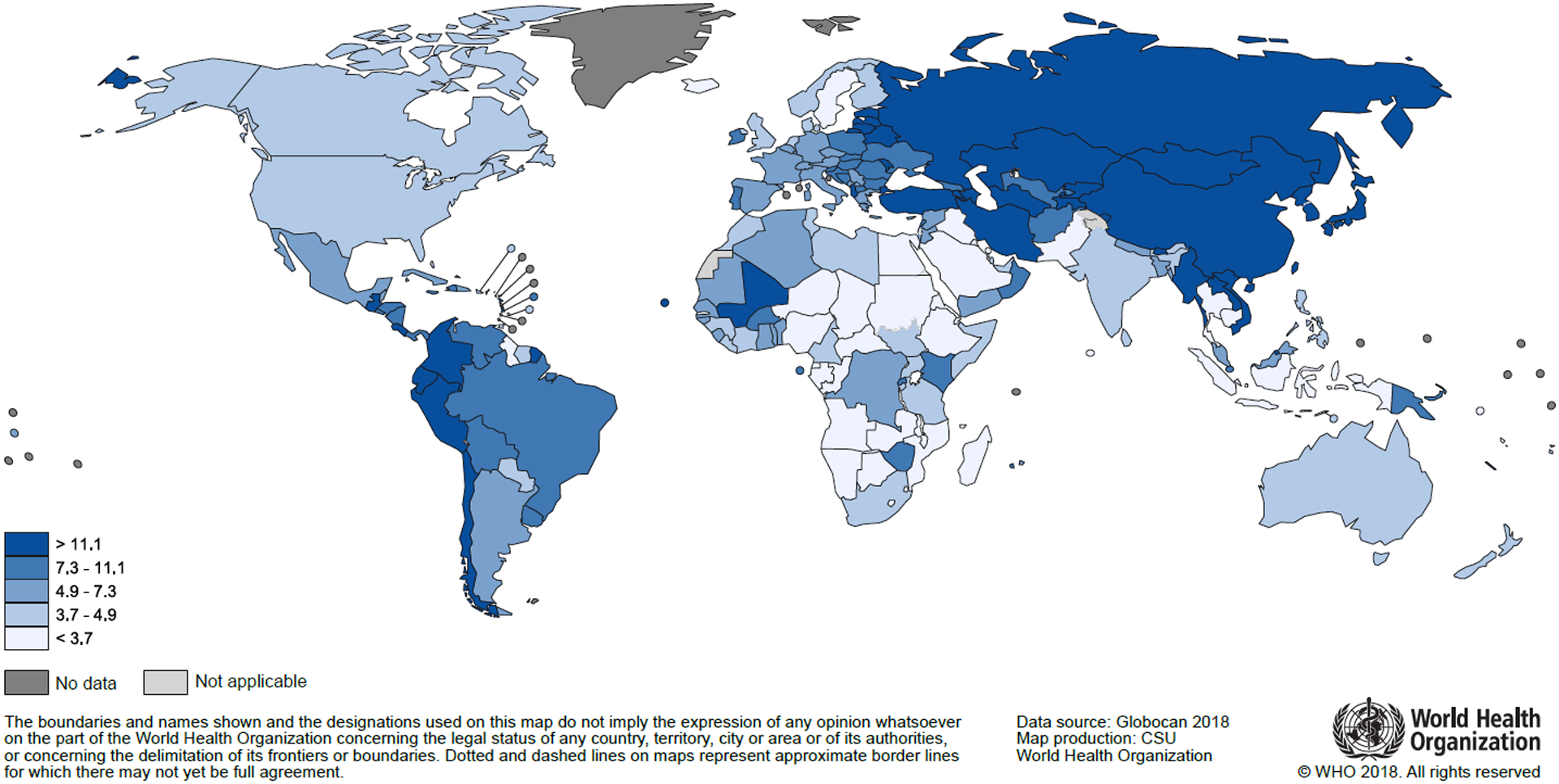
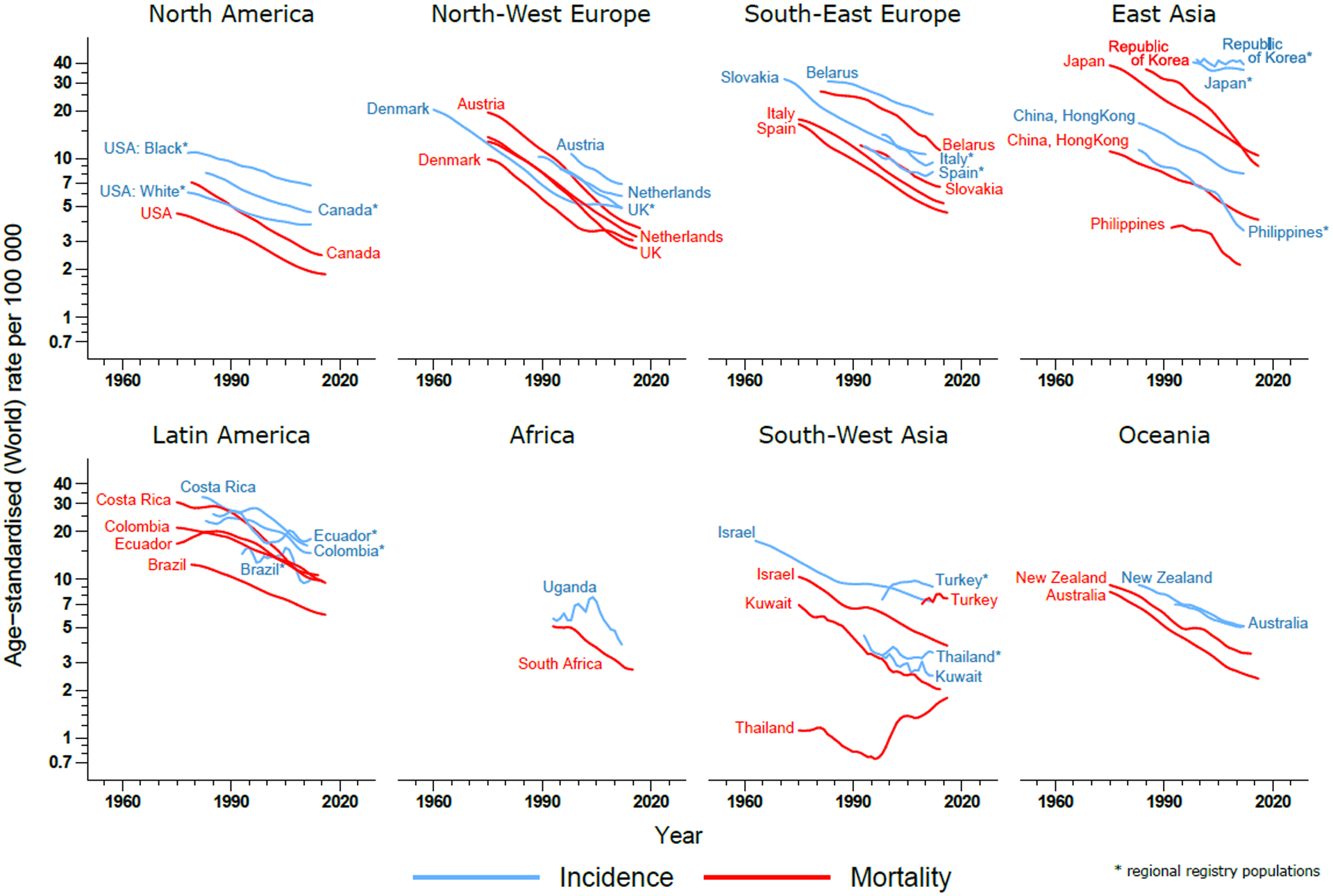
Results: We observed geographic and temporal variations in incidence and mortality for all 5 types of GI cancers. Esophageal, gastric, and liver cancers were more common in Asia than in other parts of the world, and the burden from colorectal and pancreatic cancers was highest in Europe and North America. There was a uniform decrease in gastric cancer incidence, but an increasing incidence of colorectal cancer in formerly low-incidence regions during the studied time period. We found slight increases in incidence of liver and pancreatic cancer in some high-income regions.
Conclusions: Although the incidence of some GI cancer types has decreased, this group of malignancies continues to pose major challenges to public health. Primary and secondary prevention measures are important for controlling these malignancies-most importantly reducing consumption of tobacco and alcohol, obesity control, immunizing populations against hepatitis B virus infection, and screening for colorectal cancer.
Keywords: Cancer; Epidemiology; Global; Incidence; Mortality; Risk Factors.
Copyright © 2020 World Health Organization. Published by Elsevier Inc. All rights reserved.
PubMed Disclaimer
Conflict of interest statement
Conflict of interest: All authors declare no conflicts of interest.
Figures
Similar articles
-
Worldwide Burden of, Risk Factors for, and Trends in Pancreatic Cancer.
Gastroenterology. 2021 Feb;160(3):744-754. doi: 10.1053/j.gastro.2020.10.007. Epub 2020 Oct 13.PMID: 33058868 -
Geographical and Temporal Variation in the Incidence and Mortality of Hepato-Pancreato-Biliary Primary Malignancies:1990-2017.
J Surg Res. 2020 Jan;245:89-98. doi: 10.1016/j.jss.2019.07.031. Epub 2019 Aug 9.PMID: 31404895 -
Burden of six major types of digestive system cancers globally and in China.
Chin Med J (Engl). 2024 Aug 20;137(16):1957-1964. doi: 10.1097/CM9.0000000000003225. Epub 2024 Jul 3.PMID: 38958046 Free PMC article. -
Epidemiology of gastrointestinal and liver tumors.
Eur Rev Med Pharmacol Sci. 2010 Apr;14(4):249-58.PMID: 20496531 Review. -
Cancer burden and control in the Western Pacific region: challenges and opportunities.
Ann Glob Health. 2014 Sep-Oct;80(5):358-69. doi: 10.1016/j.aogh.2014.09.015.PMID: 25512151 Review.
Cited by
-
A novel electrochemical immunosensor based on PdAgPt/MoS2 for the ultrasensitive detection of CA 242.
Front Bioeng Biotechnol. 2022 Aug 24;10:986355. doi: 10.3389/fbioe.2022.986355. eCollection 2022.PMID: 36091451 Free PMC article. -
Descriptive Epidemiology of Early-Onset Gastrointestinal Cancers in Iran, 2014-2018.
Middle East J Dig Dis. 2024 Jan;16(1):28-33. doi: 10.34172/mejdd.2024.365. Epub 2024 Jan 31.PMID: 39050103 Free PMC article. -
Prognostic risk factors for T1 thoracic esophageal cancer: a retrospective cohort study.
Transl Cancer Res. 2022 Aug;11(8):2733-2741. doi: 10.21037/tcr-22-308.PMID: 36093557 Free PMC article. -
Morning chronotype and digestive tract cancers: Mendelian randomization study.
Int J Cancer. 2023 Feb 15;152(4):697-704. doi: 10.1002/ijc.34284. Epub 2022 Sep 22.PMID: 36093575 Free PMC article. -
A novel genomic instability-derived lncRNA signature to predict prognosis and immune characteristics of pancreatic ductal adenocarcinoma.
Front Immunol. 2022 Sep 15;13:970588. doi: 10.3389/fimmu.2022.970588. eCollection 2022.PMID: 36148233 Free PMC article.
References
- Ferlay J, Ervik M, Lam F, et al. Global Cancer Observatory: Cancer Today. Lyon, France: International Agency for Research on Cancer. Available from: https://gco.iarc.fr/today; 2018.
- Islami F, Goding Sauer A, Miller KD, et al. Proportion and number of cancer cases and deaths attributable to potentially modifiable risk factors in the United States. CA Cancer J Clin 2018; 68(1): 31–54. – PubMed
- Diet, Nutrition, Physical activity, and Liver Cancer. Continuous Update Project Report: World Cancer Research Fund / American Institute for Cancer Research, 2015.
- Diet, Nutrition, Physical activity, and Colorectal Cancer. Continuous Update Project Expert Report 2018.: World Cancer Research Fund / American Institute for Cancer Research, 2018.
- Food, Nutrition, Physical activity, and the Prevention of Pancreatic Cancer. Continuous Update Project Report: World Cancer Research Fund / American Institute for Cancer Research, 2012.

